|

 |
|
|
|

Commentary by Craig and Scott Johnson
|
| 7/5/2010 |
Vaso Chucovitch
More from Oby. He sent along the text of an article on Mayor Speer and Ed Chase, which says of Chase, in part:
One of Chase's gambling and saloon business associates, Vaso Chucovitch, had replaced him as underworld czar before the gambler cashed in his chips. A hefty, red-mustachioed Slav, Chucovitch had courted Speer and taken Chase's place as the broker between the bars and the boss.
Serb Chucovitch has been noted in these pages just once before, in 2006, in reference to a Denver Post article on Denver's Smaldone crime family:
The Smaldones weren't the city's first crime syndicate, not by a long shot. At the end of the 19th century, Vaso Chucovich and his partner, "Big Ed" Chase, ran gambling, saloons and the rackets in the city's lower precincts.
They were succeeded by Lou Blonger, one of the most colorful characters in the city's history. Blonger's game was bunco and stock swindles. His gang lurked near Union Station, picking off "marks" as they stepped off trains and steering them to phony stock-market offices downtown.
Vaso, who on his death in the Thirties left a hefty sum to pay for a memorial to Speer, deserves a closer look...
-CJ
|
| 7/3/2010 |
Edwin Gaylord
Just had a most interesting exchange with Oby Tolman, whose daughter-in-law is descended from Edwin Gaylord.
Gaylord might be familiar to close readers of this site as the long-time partner, both in the gambling and bunco businesses, of Denver's gambling king, "Big Ed" Chase. According to Oby, Gaylord was a barkeep, then a cashier, then a proprietor of Chase's Palace Theatre. In 1889-1890, Edwin was manager of the Colorado Policy Association, a position also notably held by Chase. Lou was said to have numerous such shops at the time.
Chase and Gaylord were married to sisters, Frances Minerva Barbour and Adah S. "Addie" Barbour. Addie was an actress.
The relationship between Chase, Gaylord and the Blongers was a rocky one. It's safe to assume that as Tenderloin proprietors they had much in common common goals, common friends and common enemies, with many opportunities to stand shoulder-to-shoulder but in the end the Denver Underworld could only have one master. For this position, there were three competitors in the 1890s: Chase-Gaylord, the Soap gang, and the Blonger Bros.
Chase was the old man, a Denver pioneer and pillar of society, head of the City Hall gang, ruler of the gambling houses, saloons and precincts. Upstart Soapy Smith and his brother Bascomb came to prominence in the early '90s, sharing the stage with Chase through several political scandals on the strength of their gambling establishments, the work of their many short con minions, and their burgeoning political influence.
Coming from behind were Sam and Lou, who finally settled in Denver around 1889, but who immediately gave the others a run for their money, establishing a fairly long succession of saloons, gambling rooms and policy shops. Bunco men under the Blonger sway proliferated, and the brothers did what they could to elect friendly politicians. Finally, in 1895, the winds of change gained in strength.
In April of 1895 Soapy and Bascomb Smith made a commotion at 1644 Larimer Street after roughing up the chief of police down the street. Lou was reportedly behind the cigar counter with a double-barreled shotgun. Bascomb Smith was arrested for assaulting bartender Johnny Hughes, and ended up serving a year.
October 17, the Rocky Mountain News described the Chase and Blonger gangs, their influence over municipal officials, some of the current gang members, and their methods.
November 1, gambling is declared open again after the City Hall War and the Crackdown of 1894. On the 11th the RMN insinuates Lou's men may have been paying voters at the polls simply to help Lou win his bets on Webb for sheriff.
On November 15 Sam is arrested, along with May Bigelow of the notorious California Gang — female pickpockets and blackmailers. Lou is their ever-ready bail bondsman.
Sam stands accused of obtaining stolen goods. Smith's men Bowers and Jackson had fleeced S.W. Wolcott of a $600 check, which went to Bascomb, who took it to Sam, who directed him to a cooperative bank teller for cashing — and took twenty bucks for his trouble.
November 18, Bascomb Smith writes a letter to his brother, Soapy Smith, from the county jail, mentioning Sam's predicament and that the DA was pressuring him to testify against Sam.
December 9, Walter Farragher loses over $1000 to some Denver con men. The next day a number of Chase and Gaylord's men, including former Smith man Jackson, are arrested in connection with the incident, but they claim they are in custody to make the guilty party impossible to identify — because the Blonger gang was actually responsible, and the city detectives were assisting Lou. Farragher is in hiding.
The Chase-Gaylord gang is dead sore on the Blonger crowd, and the soreness is intensified now that they have been arrested for an offense from the proceeds of which they have made nothing.
December 12, Ed Chase flexes his muscle and Sam is arrested again, this time to pressure him into ratting out the perpetrators of the Farragher swindle.
Come the 14th, and W. H. Carson is in jail over the Farragher incident, at $3000 bail. Also arrested is Owen Snider. Carson's attorney, fellow Forest Queen owner and assistant district attorney Neil Dennison successfully argues to Justice Cowell that the charge was in fact a misdeanor, not a felony, with a maximum fine of $100 or thirty days. Lou is ready with bail, but a new felony warrant is issued and Carson re-arrested. Lou posts the $2500 bail.
On the 16th the RMN finds Farragher sequestered in a hotel room by Chief Goulding. He expresses fear of the gang, and states he'd be happy with half his money back.
December 21, Farragher has skipped town, and the case against Sam falls apart.
January 27, Sam goes to court over the Wolcott swindle. Despite Bascomb's testimony, solicited by the DA in return for his freedom and a job on the force, the charges are easily overcome. Bascomb accuses the DA of welching.
It would seem that the whole affair gives Sam and pause, and he seems to retreat into the world of horse racing after this. He is rarely heard from again until his death in 1914.
Early in 1896, unable to resolve the legal cloud left by his assault on Johnny Hughes, Soapy Smith leaves Colorado for good. The Blongers' influence even at the expense of heavy-hitters Chase, Gaylord and Smith seems to be on the rise. A few years later, with gambling now outlawed for good, Ed Chase transitions into real estate. He finally dies in California about the same time as Lou, in 1924.
With the new century, Lou, now out of the legal gambling business, turns increasingly to the development of the big store con for which his gang would become so famous. What's more his influence over Denver's city hall, police and courts seems nearly complete, and for the next twenty-five years he will grow very wealthy posing as a kindly landowner, without losing a single soul to the penitentiary.
This exchange with Oby has also led me to make a connection we had previously overlooked. Gaylord, as it happens, took a lease on the Blonger's Forest Queen mine, working it from 1915 until his death in 1923, as is evidenced by Lou's letters to partner O.W. Jackson and his widow.
In fact, Gaylord was in charge when a wealthy new vein was discovered just two days after Lou's arrest.
Looks like it's time for the first new inductee to the Grafters Club in quite a while! It does raise the question anew, however; Should Chase, Soapy Smith, and Bascomb, be full members or on the blacklist? Sometimes it's a fine line...
For the record, curiously, it also appears Edwin rode a gelding named The Abbot to glory, as reported in the NY Times. On September 25, 1900, one Edwin Gaylord of Denver rode the pacer to a new world's record in the mile at 2:03¼ at Terre Haute, Indiana.
-CJ
|
| 4/24/2010 |
Lou Rises from the Grave
Sounds like Lou made an appearance last Sunday at Fairmount Cemetary during Tom Noel's gravesite tour.
-CJ
Blonger Implicated?
News from researcher Amy Reading calls into question a long-standing accusation against Lou.
As noted in articles in both the Rocky Mountain News and the Los Angeles Times, Lou was implicated in a nefarious bunco scheme in 1915 in a decade otherwise nearly devoid of news on the Blonger gang when workers renovating deserted office space on Welton Street in Denver discovered evidence of a hastily abondoned setup for the notorious wire con.
The workmen found numerous slips of paper detailing transactions in the thousands of dollars, and telegraph wiring intended to fool prospective bettors. The scene was right out of "The Sting:"
The paraphernalia was simple in some ways and complex in others. The electrical wiring was quite complex. The victims apparently sat about in the east room of the suite of three and listened to the "returns" upon which they had been slipped "sure thing" tips by outside "steerers."
The telegraph instruments clattered merrily, while an employe referred to as the "boardman" kept things humming with excitement by writing down the "results" on the blackboard, which was suspended from the east wall between rooms No. 1 and No. 2. Pieces of red and white chalk and splashes of color showing where the "boardman" wiped the wall below the blackboard with his eraser, told a plain story.
But the arrangement in electrical wiring would delight a connoisseur. It was elaborate and painstaking as to effect. Any bona fide player who was out to beat the "bookies" on "inside" tips would be deceived by just such ultra-obvious wiring. The tout ensemble gave the impression of a real poolroom, "run on the quiet, because the authorities wouldn't stand for it if they got wise, of course," as the victim is invariably informed.
But was it on the up and up?
Reading, in town to attend the opening of the new jail, did some research as well, and has the following to say on the Welton Street affair:
...did you know that the 1915 expose of Blonger's fake betting parlor was itself a frame-up that, at least on the surface, had nothing to do with Blonger? Apparently, a man named Glen Duffield, Undersheriff and warden of the county jail, staged the dismantled swindlers' lair along with a bunc named Isidore "Kid" Warner, so that Duffield could "discover" it, oust the Chief of Police (a man named O'Neill who was a good friend of Blonger's), and get himself appointed Chief. It worked, even though his association with Warner and the rumor that he'd faked the fake betting parlor were plastered all over the papers. Let me know if you want any of the newspaper articles on this one.
Do we ever. Duffield is not unknown to us. He was one of the detectives who accompanied Lou to Colorado Springs in 1894 to investigate the tar and feathering of Col. Tarsney following the so-called Battle of Bull Hill. Duffield had been assigned by Denver police chief Armstrong to extract a confession from a "special deputy" implicated in the affair. Lou's presence on the trip is unexplained, but extracting confessions is noted as one of his talents.
-CJ
Lou Deposed
Reading also researched the "Maiden scrapbook," compiled by a Denver cop over many years on the force. In it she found an article detailing a deposition given by Lou after his conviction in response to a suit filed by a man named Peck. He was deposed by Henry May, whom Van Cise defeated in the Republican primary on his way to becoming District Attorney:
Blonger Swears Duff Led Million-Dollar Bunco Ring That Operated in Denver
Dealings With Ring Are Denied in Deposition Taken For Defense of $17,000
Suit Filed By Victim of Confidence Game
Lou Blonger, testifying under oath for the first time, placed the leadership
of the million-dollar Denver bunco ring on the shoulders of A.W. Duff, in a
deposition taken Saturday at the Canon City penitentiary.
Blonger readily admitted ownership of the bank passbook which played such an
important part in the trail of the bunco ring. He admitted that the
memoranda of telephone numbers of "Dapper Jackie" French, bookmaker for the
ring; Len Reamey, confessed member of the gang, the 'Lookout', and various
other members of the ring, were in his handwriting. But-
Deposition Made to Defend Suit
He explained that he had written these memoranda, not for his own use, but
at the request of Duff.
'Those people would be calling for Duff,' he said in response to questions
by Attorney Henry May of Denver. 'Duff asked me to put them down so I could
tell him if they called or asked where they could find him.'
He insisted that he didn't know French or Reamey, and that he 'just knew
Duff' although he and Duff had occupied offices together for years.
Blonger's testimony was given in a deposition taken by the defense in the
suit filed by John S. Peck, Flemingsberg, Ky., to recover $17,000 which was
taken from him by confidence men in Denver. Blonger, Duff, French, and
others are defendants in the suit which is scheduled for trail Nov. 13.
Blonger Declares He is Farmer
On direct examination by Attorney Howard L. Honan, who with Tom Ward
represents the defendants, Blonger denied dealings with the members of the
bunco ring, declared he knew nothing of the 'trimming' of Peck, and said
that his occupation is that of a 'farmer.' He as cross-examined by Attorney
May, who with A.J. Gould, Jr., appeared as counsel for Peck. The direct
examination lasted on a few minutes but the cross-examination required two
and a half hours.
Peck was accompanied to church one Sunday morning in Denver by an escort of
'con men.' They had communion with him and his wife and daughter. The next
morning they 'blew him off' for $17,000, according to his testimony at the
bunco trial.
Attorney May produced the receipt for the telephone in the bunco lookout for
the month in which Peck was fleeced, and asked Blonger how that receipt
happened to be in his desk.
'If it was found in my desk, Duff must have put it there,' he said. 'I
didn't. Duff sometimes puts some of his papers in my desk.'
Asked concerning his farming activities, he said that he formerly owned a
farm near Brighton which he sold ten years ago, one near Boulder which he
sold eight years ago and one in Jefferson county, part of which had been
sold.
Admits He Ran Gambling Business
'Blonger admitted tht he had been a gambler and that he was in the gambling
business as lon as gambling was permitted in Denver,' Attorney May said
Monday. 'He admitted receiving a telegram from Duff which read something
like this:
'Store closed. No sales today. Didn't make enough today to pay the nut.
'When I asked him what was meant by the store, he first said he thought it
meant what it said. But later when I inquired if store didn't refer to the
activities of the bunco men, he admitted that might be possible. He finally
admitted that 'no sales' might mean the boys hadn't been able to find any
suckers to trim, and that the reference to the 'nut' might mean that they
weren't getting enough to pay expenses.
Denies Opening Bank Box
'Blonger admitted that Duff had a safety deposit box at the American Bank
and Trust company to which he had access but he said he never opened the box
and had no idea of its contents. He denied he had had any dealings with
George Sanders, former city detective, but said he might have loaned Sanders
$10 some time just to help him out.
'When asked concerning the tapping of his telephone and the planting of a
dictaphone in his office, Blonger declared he knew of both. He said he asked
Billy Arnett, then department of justice agent, to check up on one of them.
He said Frank Milligan told him about the dictaphone being in his office.'
According to Attorney May, Blonger admitted that District Attorney Van
Cise's 'bunco list' was delivered to the Blonger-Duff office, but said it
was sent there to Duff. He denied that he looked at the list.
Testimony was introduced at the bunco trial to the effect that Sanders
obtained the list from the Colorado Springs police and gave it to Duff.
Poor Farmer Lou. framed by Duff...
-CJ
Jail Dedication
Amy Reading also sent these pics of Cindy Van Cise at the dedication of the Van Cise-Simonet Detention Center in Denver. Thanks, Amy!


-CJ
|
| 4/17/2010 |
Van Cise-Simonet Detention Center
Finally Denver gathers to dedicate the Van Cise-Simonet Dentention Center in Denver. Read all about it:
-CJ
|
| 1/18/2010 |
From the Real Estate File
October 24, 1879 - Sam's first wife Ella takes possession of lot 20, block 93 in East Denver from Edward Pisko for $2000.
March 6, 1880 - Ella sells lot 20, block 93 to Arthur Rousel[?], $2500.
January 16, 1881 - Ella sells lot 31 and 32, block 101 to A.P. Norton, $3500.
September 25, 1888 - Ella sells lot 7, Perco addition to T.J. Riley, $3500.
Sam divorced Ella in October of 1889, and married Sadie Wilson days later.
February 13, 1890 - Sadie buys lot 10, block 1, Santa Fe addition, for $650.
In 1893 Sadie sued for divorce on the grounds of extreme cruelty, Sam having beaten her on numerous ocassions.
August 3, 1898 - Lou sells lots 4 and 5, block 18, Park Avenue addition, to Marion Wilson for $3000.
-CJ
|
| 12/23/2009 |


|
| 11/25/2009 |
To Be Clear
The Armstrong account states:
Sam Belonger, when a boy of 18, walked barefoot with a wagon train across the ground where Denver, Colorado now stands. There were only two cabins then.
As Sam was born in March of 1839, he would have arrived in Denver in 1857 (before the discovery of gold at Cherry Creek) or 1858.
In 1858, it would cetainly be possible for Sam to encounter a nascent Denver City. By late in 1859, he would have found a boomtown.
The account tries to add weight to the first point with an even taller tale:
At one time, about six miles east of where Denver's capitol-building now stands, Sam Belonger and Buffalo Bill Cody, while on a scouting trip, were chased and surrounded by a war party of eight Indians. Their only chance to survive the fight was to shoot their horses and use the bodies for breastworks. Both Uncle Sam and Buffalo Bill, being dead shots with rifles, killed all eight Indians and escaped.
Further, one of Sam's obits says this:
He left Hastings in 1858 with an ox team and crossed the plains and mountains to Sacramento, Cal.
That's three votes for 1858. But only two votes for Denver, and one against; if Sam went from Minnesota to California he would have had to detour to Denver on the way West to be there in 1859, continuing on later that year or early the next to California, backtracking through Wyoming to take the Lander Road.
Maybe it's more prudent to accept the more obvious interpretation: that he went to California, then returned east to Colorado in the next year or two, as Denver grew into a bustling boomtown. We do know that in 1861 "S. Blonger" voted in Central City. Sam is the only reasonable candidate, and we therefore state with some certainty that Sam was indeed in Colorado by 1861.
On the other hand Sam signed a petition submitted to Congress in February of 1861:
...the reports and maps of F. W. Lander, superintendent of the Fort Kearney, South Pass, and Honey Lake wagon road, upon his operations during the years 1859 and 1860...
Thirteen thousand emigrants travelled the road the present year...
...having just passed with our wagons and stock over the new government road, from the South Pass to Fort Hall, (called Lander's cut-off)...
This would seem to certify that Sam traveled the Lander Road to California in 1859 or 1860. His train consisted of seven wagons, seventeen people, and 129 head of stock. His residence is listed as Minnesota, and the train's destination is listed as California.
The Armstrong account continues:
In 1860 and 1861 he was engaged in "freighting" and in driving a stage coach over the mountains between Sacramento and Austin, Nev.
These dates are clearly wrong Austin wasn't founded until 1862. To haul freight in Nevada in 1862 or '63 (or, at least, to take possession of a tract of land near Sacramento in 1865, as he did), Sam would then have to cross the Rockies east a second time. And he surely did. The real story behind these journeys shouldn't even need to be a tall one...
Questions:
- Would Sam's train detour to Cherry Creek in 1859, only to later backtrack to central Wyoming to take the Lander route?
- Did Sam leave Minnesota with the same train that took the Lander Road?
Any answer would go a long way toward determining the veracity of Armstrong's claim, that Sam visited Denver by early 1859. He surely visited by 1861. At any rate the current evidence seems to frown on an earlier visit.
More evidence!
-CJ
|
| 11/21/2009 |
Norfleet Returns
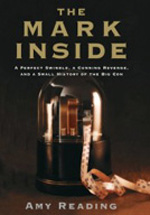
We just heard from Amy Reading, who is writing a book about Frank Norfleet and Big Con culture.
Taken, twice, for a total of $45,000, Norfleet pursued Joe Furey and his gang across thousands of miles, at his own expense, just in time to help Col. Van Cise spring his trap on the Blonger gang.
The diminutive retired farmer spent more than two years tracking down the gang who worked under Lou's protection when in Denver personally apprehending one member at a time, acting as a lawman when necessary, other times posing as a sucker and always packing heat.
We look forward to reading it soon. Good luck Amy!
-CJ
Alias Soapy Smith
Speaking of literature, Jeff Smith's book on Soapy is finally out. Scott has his copy and I'll be getting it soon. More to come...
-CJ
Sam's Journey West
I take it back... On re-reading our materials about the Lander Cutoff, it appears that the petition was initiated in 1859 seeming to indicate Sam traveled at this time, and not in 1858 and that those who signed it had already traveled the road. This puts us back at square one. Did Sam go to California, then back to Colorado, then back to California? Apparently...
Thirteen thousand emigrants travelled the road the present year; over nine thousand - all the males of the trains - signed papers of which the following are copies:
"We, the undersigned, emigrants to California and Oregon, having just passed with our wagons and stock over the new government road, from the South Pass to Fort Hall, (called Lander's cut-off,) do hereby state that the road is abundantly furnished with good grass, water, and fuel; there is no alkali and no desert as upon the old road, and while upon it our stock improved and rapidly recovered from sickness and lameness. We were much surprised at the great amount of labor that had been done in cutting out the timber and bridging and grading the road, and in all respect it more than met our expectations, especially those of us who have heretofore travelled the other routes. But we would most respectfully suggest that a bridge should be erected, as soon as possible, over Green river, the fording of which is dangerous and the cause of much trouble to the emigration, and in one instance the loss of life. We have been treated kindly, and in every case when the circumstances required it aided and assisted on our way by the Wagon Road Expedition; and we have likewise recieved (sic) the kindest treatment from the Indians; and we advise the overland emigration to California and Oregon to take this road as the shortest and best adapted for the comforts of the traveller and the preservation of stock, especially if the government, in view of the many advantage: of this route, should cause Green river to be bridged."
Signed by Ferguson Chappell and over nine thousand others.
-CJ
|
| 11/21/2009 |
Leadville Mining News
Simon's Big Stud
Rocky Mountain News, Jan. 6, 1882
Mr. Simon Blonger, manager of the Robert E. Lee mine, and a general favorite of those who know him, has been presented with a $575 diamond stud by the men connected with the mine.
That's some rock, in 1882 dollars something like $12,000 today... Nice bonus.
Simon Speaks
In May of 1882, massive quantities of ore are being shipped out of the Robert E. Lee, and 150 men are on the payroll. Of the property's prospects, Simon has this to say in the Rocky Mountain News:
"The Robert E. Lee is an immensely valuable property, and as yet a comparitively small amount of its vast riches has been taken out. The management are making preparations for an extensive display of their ores. Some immense specimens of horn silver will be exhibited that will be of great interest to a very large number of people who never seen [sic] this wonderful ore, that has so largely contributed to the welfare of Leadville and Colorado at large."
Niles Augusta
In April of 1883, Simon and Jeff Nally are working the Niles Augusta under a lease.
Buckeye State
In January of 1886, Edward Blonger, Marvin's son, is mentioned as one of the owners of the Buckeye State. The mine is "likely the best property in Sugar Loaf district."
Injury at the Blonger Shaft
Rocky Mountain News, Sept. 15, 1888
George Merlau, employed in the Blonger shaft on the New Pittsburg property, was severely injured at 5 o'clock this afternoon by a fall. Merlau was being hoisted to the top of the shaft, his foot being within a noose, and had proceeded on the journey, when the rope broke and he was precipitated to the bottom of the shaft. He was taken to the top and removed to St. Luke's hospital where he was suffering intensely into to-night. He is badly injured internally.
The article continues with curious news of the gambling situation in town. Mayor Irwin had just allowed the gambling houses to reopen, with the stipulation that the owners will be arrested on the first of each month and fined $200. What's more, "Tinhornism will not be tolerated."
And from Cripple Creek
Finally, in February of 1895, Sam is elected to the board of directors of the Free Gold Mining & Milling Co. This reference turned up two rare pieces of Blonger mining ephemera:

The ad above is from Overland Monthly magazine circa 1903 and ran for at least a few issues.

According to this map, the claim was located east of the Forest Queen, and judging from the satellite view, it was not a success except perhaps for those selling shares. Compare the rather bucolic landscape on the right where the claim was located with the decimation of the landscape surrounding the now-extinct Forest Queen, where large-scale operations continue on Ironclad Hill.

-CJ
|
| 11/20/2009 |
Sam's Journey West
For the record, I have for a long time had a problem reconciling two known facts regarding Sam's journey West, to wit; Sam signed a petition asking the federal government to build a bridge over the Snake River, where one traveler had been swept away, and various property had been lost; and he voted in an Aspen election in 1861.
The petition was supposedly circulated circa 1589 among emigrants on the California Trail who traveled the Lander Cutoff through Wyoming. This route would have taken Sam beyond Colorado on his trip out. If this had been the case, he would have first gone to California in 1858 or '59, then back to Colorado by 1861, then back to California by 1862 where he supposedly hauled freight between Sacramento and Austin, Nevada.
Possible. But likely?
What's more, this would put the kabosh on Joe's tale of Sam walking into Denver, with bare feet, when the town was just a few cabins on Cherry Creek which would seem to date the tale at 1859 at the latest. If Sam had gone to Colorado before continuing on his way to California, the Lander Road seems an unlikely route, and too late to sign the petition.

But what if the petition was circulated on the way out, before the wagons had reached the cutoff? Sam may have signed because this was the intended route of his wagon train, but then later continued on his own to Cherry Creek after hearing of the discovery of gold.
I don't know if this can be determined one way or the other, but it would seem to make the chronology clearer Sam detoured for two years before continuing on to the coast.
-CJ
|
| 11/11/2009 |
Justice Center Opening
This just in from Cindy Van Cise:
Jailed.
Denver's marketing director, Steve Sander, had the honor of being the first inmate at the new Denver Justice Center on Friday through no fault of his own.
Sander was brought to the facility's Detention Center under the guise of a "tour" but soon learned that he was the object of a sting involving habitual parking offenders in Denver.
Sheriff Bill Lovingier, director of corrections, read Sander the charges and placed him in a double cell in housing unit 2F. Bail for Sander was set at $200 and was raised by his many visitors, including Mayor John Hickenlooper, chief of staff Roxane White, Cabinet members Dave Roberts, Erin Trapp and RD Sewald, in less than an hour, releasing Sander in time to celebrate his birthday Monday.
All bail proceeds go to benefit Denver's Road Home, which also will benefit from the Justice Center's April 9 opening gala, Justice for All. The gala will offer a special preview of the $334 million facility (that's the total for the courthouse and detention center) and will be open to the public. More info on this event to come.
-CJ
|
More from the Blonger Bros. Blog
|
Genealogy - History - Gang - Posse - Evening Review
The Grafters Club - Novelty Emporium - Blonger Bros. Fake Restaurant
|
Copyright Notice: Original material copyright 2003-10 Scott Johnson and Craig Johnson. Other copyrights may apply to materials found herein. Our primary goal is to reintroduce the Blonger Bros. to the lexicon of the Wild West. We therefore encourage the use of our research, provided due credit is given.
http://www.BlongerBros.com
|
|